

How to Build a Branded Residence: A Guide for Developers
The global luxury real estate market is currently going through a massive, seismic shift. We aren’t just talking about a small trend here; we are talking about a complete evolution of high-end property. Branded residential homes that are developed in partnership with prestige hospitality, fashion, or even automotive brands have evolved from a tiny niche asset class into a dominant force in the industry.
This guide outlines the essential steps, the benefits, and the tough challenges involved in building a branded residence. It provides a roadmap for developers who are looking to capitalize on this incredibly lucrative market segment.


The Business Case: Why Build Branded?
Before we dive into "how" you should build these, it is crucial to first understand "why" you would want to. The financial performance of branded residences consistently outperforms non-branded luxury peers, offering compelling advantages across the entire value chain.
Enhanced Market Value and Premium Pricing
The most immediate benefit that grabs everyone's attention is the "brand premium." Research consistently shows that branded residences command a price premium of 30% to 40% over comparable non-branded units. That is a massive difference. In some emerging markets, this premium can even surge up to 70%.
This premium isn't just a theoretical number on a spreadsheet, either. It’s real money. For example, Ritz-Carlton Residences in Miami consistently outperform their local comparables. Meanwhile, on the other side, Dubai’s Atlantis The Royal has achieved resale premiums of nearly 200%.
Why is this happening? It’s because buyers are willing to pay significantly more for the assurance of quality, security, and prestige that a top-tier brand guarantees. They know what they are getting, and they are willing to pay for that peace of mind.
Increased Brand Loyalty and Lifetime Value
There is another layer to this. Branded residences create "sticky" customers. Buyers aren't just purchasing a piece of real estate; they are buying into a whole lifestyle ecosystem. This deep emotional investment translates into a very high customer lifetime value.
Residents often become brand advocates. This leads to repeat purchases across different geographies and valuable referrals within their own networks. For the developer, this means you have a built-in buyer pool ready for your future projects.
Also, unlike hotels, which rely on transient occupancy to make money, branded residences generate consistent revenue streams. This comes through ongoing management fees and service fees, providing a stable financial baseline.
Consistent Quality and Service Standards
In the world of ultra-luxury, your reputation is everything. Partnering with a global brand imposes a rigorous framework of quality control that extends from the construction materials you use all the way to daily operations.
This partnership actually mitigates development risk. Buyers trust that a Four Seasons or Aman project will be delivered to an exacting standard, regardless of the local market's maturity. This trust reduces buyer hesitation, which is particularly important during those critical pre-construction sales phases.
Key Steps to Building a Branded Residence
1. Brand Selection and Strategic Alignment
The first and most critical step is selecting the right partner. This decision is huge because it will dictate the project's design, your pricing power, and your target demographic.
Hospitality vs. Lifestyle Brands: Developers must choose between established hotel operators (like Ritz-Carlton or Six Senses) and "non-hotel" lifestyle brands (like Porsche, Armani, or Bulgari). Hotel brands bring operational expertise and huge service infrastructure. On the other hand, lifestyle brands offer unique design aesthetics and a deep emotional connection with specific "tribes" of buyers.
Market Fit: The brand must align with the location. While a formal heritage brand might thrive in London or New York, a vibrant, modern lifestyle brand might be much better suited for Miami or Bangkok.
Financial Terms: Developers need to negotiate licensing fees. These are typically 3% to 6% of gross sales, plus ongoing management fees. These costs must be modeled carefully against the projected sales premium to ensure the partnership is actually adding to the bottom line.
2. Design and Development Integration
Once a brand is selected, its DNA must be woven into the physical asset. This is where the concept of "design governance" comes into play.
Collaborative Design: The brand’s design team will work alongside the developer’s architects. Every element from the lobby architecture to the bathroom fixtures must meet brand standards.
Amenity Sizing: Branded residences require hotel-grade amenities, like spas, concierge services, and dining. However, these need to be scaled for residential use. A common pitfall is over-sizing these spaces, which drives up service charges for residents. Conversely, under-sizing them leads to dissatisfaction. You have to find that balance.
Technological Integration: Modern luxury buyers expect smart building systems. Integrating these systems during the design phase is much more cost-effective than retrofitting later. It is essential for future-proofing the asset.
3. Service and Operational Excellence
The "hardware" (the building) is important, but the "software" (the service) is what really justifies the price premium.
Service Tiers: Successful projects often offer a menu of services. Base services, like concierge, security, and common area maintenance, are covered by standard fees. Meanwhile, "a la carte" services, things like private dining, housekeeping, and pet care, generate additional revenue.
Staffing: Staff must be trained to hospitality standards. A concierge at a branded residence isn't just a doorman; they are a lifestyle manager capable of securing hard-to-get reservations or organizing private events.
Long-Term Management: The developer must establish a robust legal structure, typically through an HOA, that binds the operator to the property for decades. This ensures that the brand standards and property values are maintained long after the developer has exited.

Navigating Challenges and Risks of Building a Branded Residence
While the rewards are high, branded residences are complex undertakings with unique risks. You need to go in with your eyes open.
Maintaining Brand Consistency
The biggest operational challenge is maintaining the "brand promise" over time. A hotel brand might manage a property for 40 to 80 years. During this time, the building will age, and design trends will inevitably shift.
Developers and brands must agree on sinking funds and refurbishment cycles upfront. If the property starts to look tired, it damages the brand's reputation and the owner's asset value. Rigorous audits and clear contractual obligations regarding maintenance are essential.
Balancing Identity with Local Preferences
A global brand must adapt to local tastes without diluting its identity. For instance, an Armani Residence in Dubai might need to incorporate local preferences for privacy or layout, all while maintaining the brand's signature minimalist aesthetic.
Failure to adapt can result in a product that feels alien to the local market. However, adapting too much can strip the project of the unique brand identity that buyers are paying for. It’s a tightrope walk.
Managing Costs and Profitability
Branded residences are capital-intensive. The licensing fees, premium construction standards, and high-spec amenities drive up costs significantly.
Margin Compression: If construction costs spiral or sales velocity slows, the developer's margins can be squeezed tight. The projected price premium must be robust enough to absorb these higher input costs.
Absorption Risk: While branded units generally sell faster, saturation in key markets like Dubai or Miami is a growing concern. Developers must ensure their project offers a unique value proposition beyond just the logo on the door.
The Future of Luxury Living
Building a branded residence is a bold move. It requires developers to think less like construction companies and more like hospitality experts. The most successful projects won't just rely on a famous name; they will build real communities that focus on wellness and lifestyle.
As the market evolves, the opportunities are massive for those who adapt. By offering the comfort of a private home with the service of a luxury hotel, developers can create true value. To learn more about where the market is heading, read our analysis on The Year That Was: 2025 Branded Residences Trends & Industry Voices.
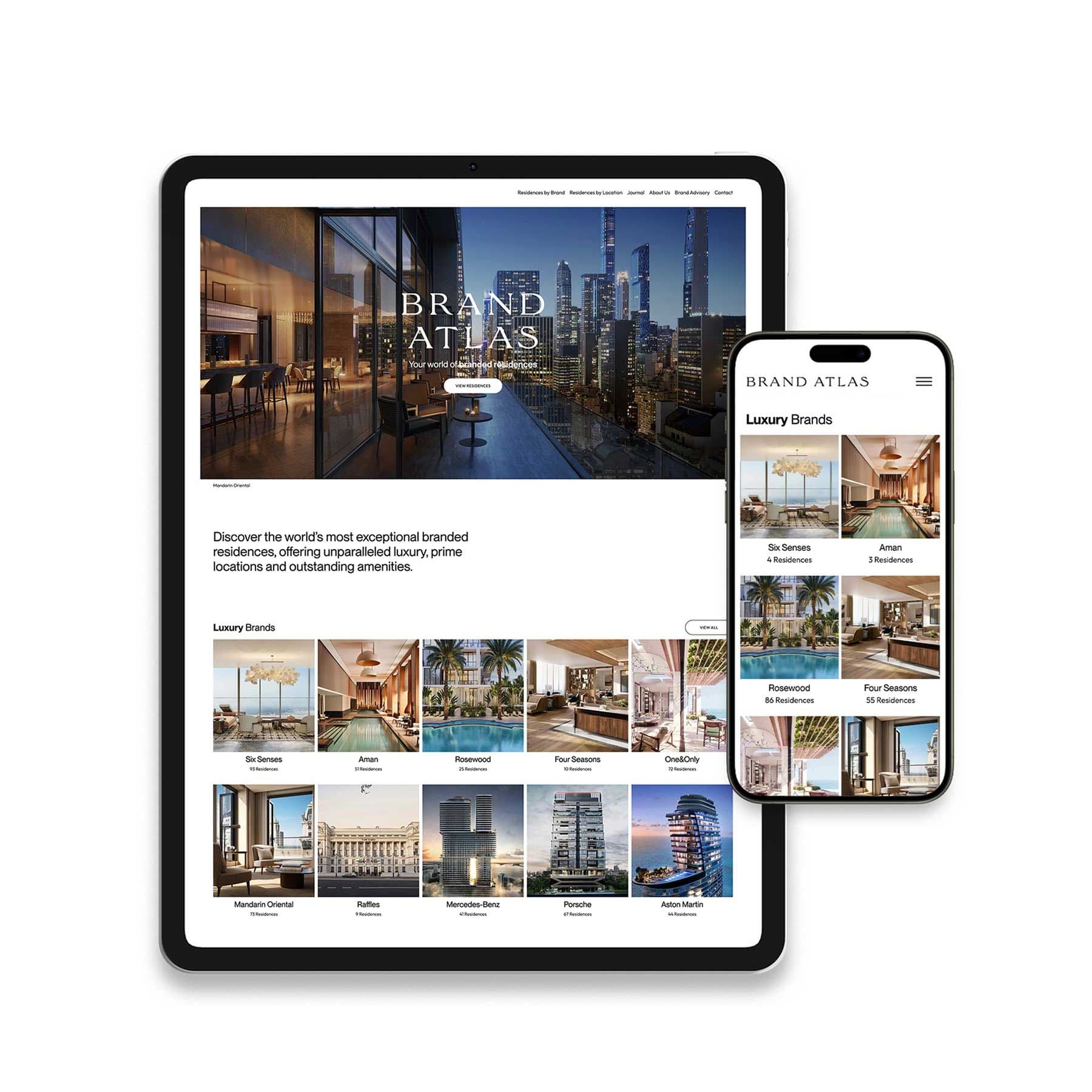
Brand Atlas is the world’s leading branded residences platform and brand consultancy.
Offering the definitive collection of the finest luxury branded residences in the most coveted locations, we give buyers and brands a unique opportunity to connect in this highly desirable and fast-growing market.
We work exclusively with leading brands, recognising the loyal relationship they share with their international audiences - and the exciting extension of luxury lifestyles through exceptional properties.
Providing an unparalleled and unbiased global overview, we enable buyers to see where their favourite brands are developing residences and to enjoy exploring and experiencing these exceptional properties.
Brand Atlas showcases the world’s finest branded residences on one digital platform, allowing global UHNW buyers access to a definitive collection of properties through a prestige network and top-tier technology.
Related News
The 10 Most Exclusive Branded Residences in 2026
In 2026, exclusivity in branded residences is no longer defined by price alone. It is shaped by a sophisticated combination of brand equity, geographical rarity, design integrity, and the ability to deliver a consistently elevated living experience.
Premium vs. Performance: The Real Trade-Off Behind Branded and Non-Branded Luxury
Paying 30% more for a branded residence is either a sound strategic move or an expensive oversight. What determines the outcome is not the name on the building, but how well the investor understands the underlying mechanics of the asset before they commit.
The Branded Residence Premium: How Much Is Real, and How Much Is Marketing?
In Miami, Dubai, London, and Singapore, a brand affiliation regularly adds 40% to the price of a residential asset over comparable non-branded stock. In prime markets globally, that range typically sits between 20% and 35%. Those numbers are real. They are also only half the story.